Literature-grounded LLM scientist
Retrieves evidence, extracts leaf and formulation descriptors, critiques hypotheses, checks constraints, and prepares auditable rationales for human review.
FoliarShield-AI turns foliar delivery from trial-and-error formulation into an evidence-linked platform for retention, rainfastness, controlled release, and living-payload survival on difficult-to-wet leaves.
The challenge
Sprayed droplets and encapsulated payloads rebound, splash, roll off, evaporate, wash away, or lose activity under UV, drying, and rainfall. The problem is sharpest on waxy, hydrophobic, or otherwise difficult-to-wet crop leaves.
Current formulation practice rarely couples droplet impact, spray mode, leaf wettability, rheology, encapsulation, release kinetics, and microbial survival inside one predictive design framework.
Experimental base
Platform architecture
Retrieves evidence, extracts leaf and formulation descriptors, critiques hypotheses, checks constraints, and prepares auditable rationales for human review.
Connects leaf traits, droplet physics, capsule architecture, rheology, release kinetics, microbial persistence, and evidence provenance.
Uses uncertainty and expected Pareto improvement to recommend formulation batches under safety, sprayability, feasibility, and material constraints.
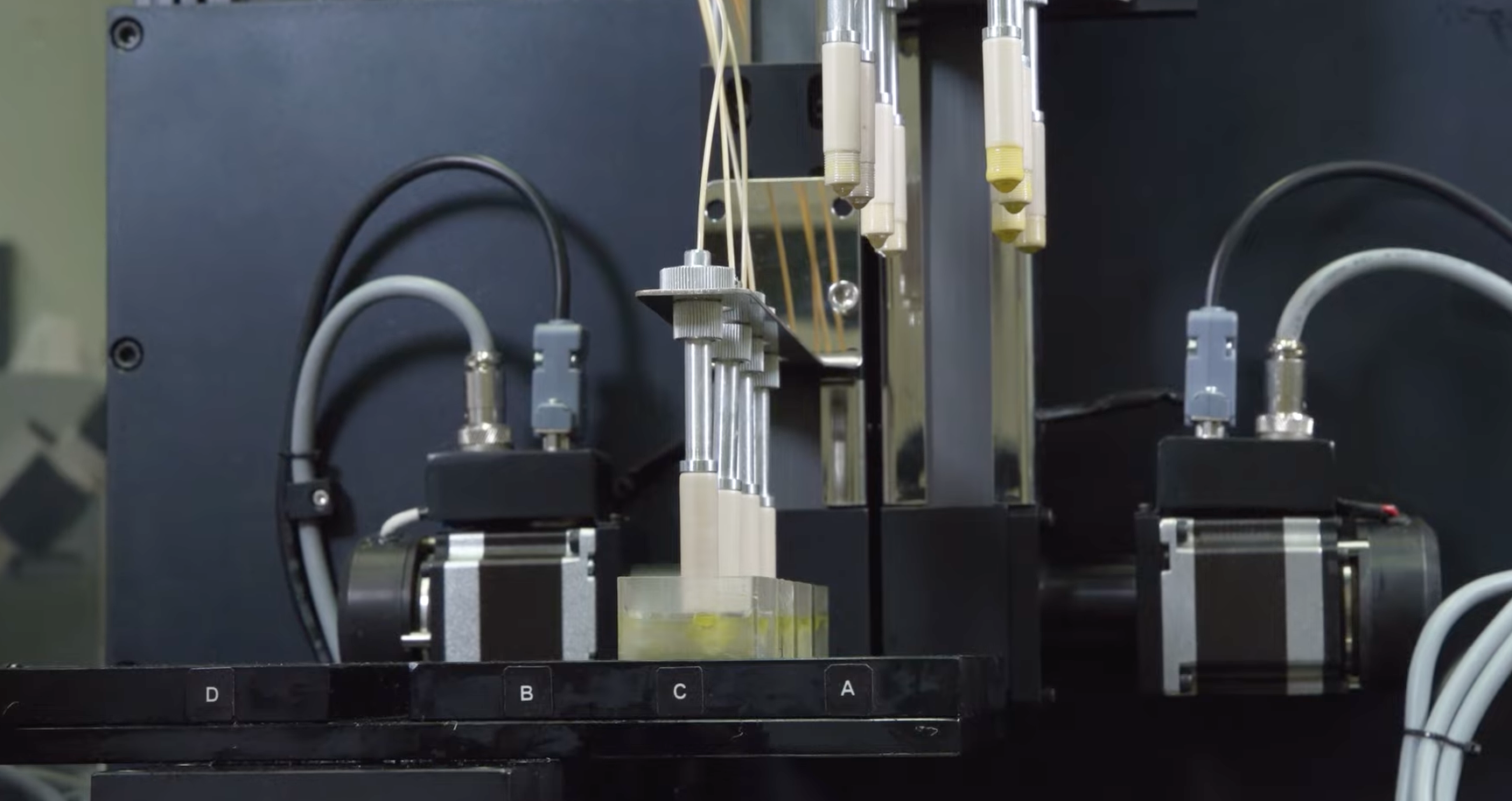
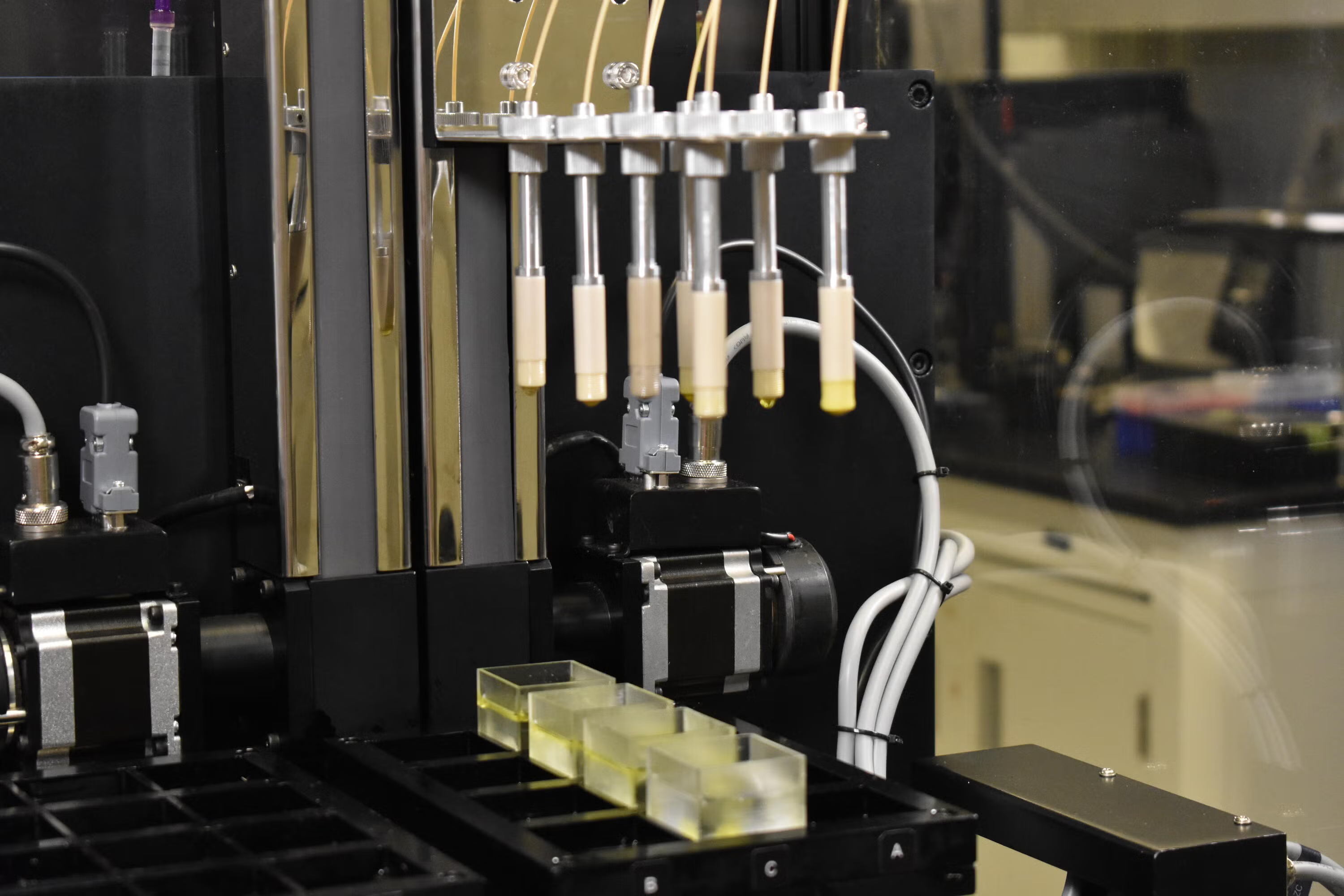
Fast image-based droplet, spray, rainfastness, evaporation, and early-release assays drive iteration; slower viability and plant assays validate shortlists.
Expected outcomes
Discovery loop
Viscosity, oil fraction, shell chemistry, capsule size, surfactant/adjuvant choices, release half-life, and payload class.
Droplet impact videos, contact-line motion, spray coverage, retained fluorescent intensity, wash-off, evaporation, and early release.
Release curves, microbial viability after atomization and drying, UV exposure, recovery, and controlled polyhouse or plant validation.
Beneficiaries
Roadmap
Finalize the rice and waxy-brassica leaf panel, payloads, responsible-use protocols, knowledge graph, baseline assays, and metrics.
Run fluorescent tracer or low-risk surrogate batches through droplet, spray, wash-off, evaporation, release, and Bayesian optimization cycles.
Expand to spray-mode transfer, rheology, encapsulation variables, uncertainty calibration, literature-grounding evaluation, and compatibility screening.
Introduce a non-pathogenic Bacillus-like payload and compare unencapsulated, conventional carrier, and AI-selected cloaked or capsule systems.
Complete evaluation, package datasets and code, publish methods and failures, run workshops, and formalize community governance.